
A Plan Approved
Today new plans were unveiled to leverage Brooklyn’s Prospect Park to reduce area flooding in the surrounding areas by enhancing it’s capacity to hold millions of gallons of water during storms.

The basic gist:
Lake as retention system: ability to quickly “lower the water levels” in the large existing lake so it can hold a lot more water on-demand as storms approach (can lower within 36 hours…currently it takes weeks).
New pond and rain gardens: build a new pond / water retention system near the Zoo with green infrastructure along West Drive: a combo of retention tanks, channels, grading, and plantings.
Restored pond: improve conditions at older pond near Flatbush Ave.
Lake shoreline upgrade: reconstruct the shoreline of Brooklyn’s only lake to improve its environmental resiliency and enhance the visitor experience.
Cost: ~$70M
When: Start 2029 and est complete 2032.
Walk Thru by BK DEP Comish
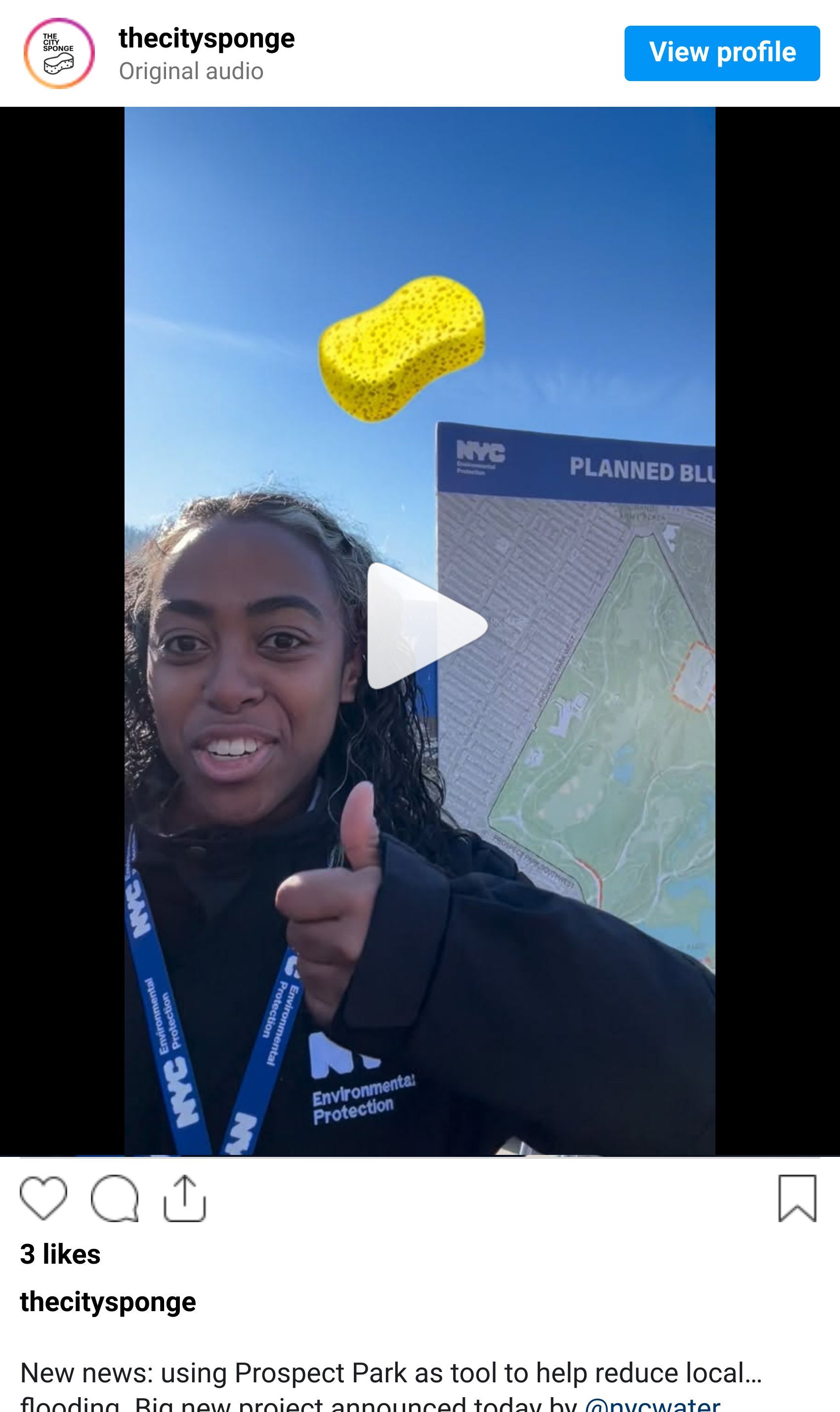
“Blue Belt”
They call it a “blue belt” and it’s the first to hit Brooklyn after a successful pilot of these ideas in Staten Island.

NYC DEP Bluebelt Program
Other Cities Getting Spongier
This is one type of tactic for urban resilience in major cities. Flood experts such as Rebuild By Design and One Architecture have been advocating for plans like these in their 2022 Rainproof NYC Report: “Turning The Concrete Jungle Into A Sponge”. They cite projects like this and examples from other cities around the world.

Going Faster To Try To Keep Up
Just a month ago, two people drowned in NYC apartments from stormwater flooding, including a man nearby to this project in the Flatbush area.
NYC DEP Commissioner Rit Aggarwala recognizes that and the need to move faster.
4 of the most intense rainstorms in NYC history have happened in the last 4 years. The climate is changing faster than our infrastructure can keep up.

NYC DEP Rit Aggarwala Explains Plans
Big projects like this ARE valuable in that they will take a multimillion-gallon-gulp out of cloudburst flood waters at key moments.
But, that wont solve it all. While the city is tackling this on many fronts, they also underscore the need for individual homeowners, building owners to do their part. We just can’t wait for the city to solve it all. After all, sewer upgrades and big projects like these many take years. So people need to do things at their place as well.
Why Does This Take So Long?
A fair question. One reason is it took a year to study the details of how water moves in and out of the existing park, then run hydrological models on different ways to increase capacity WITHOUT wrecking key parts of the park. Doing a big project means lots of engineers and other experts to ensure it works when water drops and rises.
The other things that slow down projects like this are:
Community input: public land projects are better when the communities get to review them and provide input and local expertise. This takes time.
Procurement: getting bids reviewed and approved take a long time in city government, something many city commissioners mention.
Money: oh yeah, there’s that
A Walk Turned Into $70M
The effort really started in earnest 3 years ago, when Morgan Monaco, the head of Prospect Park Alliance, took a walk in Prospect Park with DEP’s Rit Aggarwala. They wanted to see what could possibly be done to improve the park and reduce area flooding, both in the park but also in the surrounding Brooklyn neighborhoods. Soon after that walk, there was a bad storm which increased the urgency.
…and here we are, 3 years and $50M later”

Morgan Monaco, Prospect Park Alliance
The Prospect Park Alliance is putting in $20M on top of the $50M from DEP and NYC Parks, totaling about $70M in approved funding.
Creative and collaborative financing like this - from multiple city agencies and even non-profit community groups - is a critical skill set for urban resilience. Getting money from different sources may increasingly be the way cities have to operate if they want to afford resilience work in public and private spaces. We heard the same thing from Hoboken’s Chief Sustainability Officer Jennifer Gonzalez when she gave a tour of the heralded work there.
This Is What Progress Looks Like
It may not be as fast as any of us want, but it is progress: creatively financed, leveraging nature, working with community groups, and getting scheduled. There are many other projects across the city at different stages, but today people around this part of Brooklyn were appreciating the moment that one part of the solution was approved.
This is an example of when government works

Karl-Henry Cesar, Chairperson BK CB 14
Homeowner / Renter? Free Assessment

For homeowners and renters (not commercial tenants), the city is offering free professional flood assessments from engineers in certain areas. Get a free plan courtesy of NYC HPD…normally $$.
(Thank you City Sponge sponsor BJH Advisors)
